Vodka vs Gin: What Makes Each Spirit Unique?
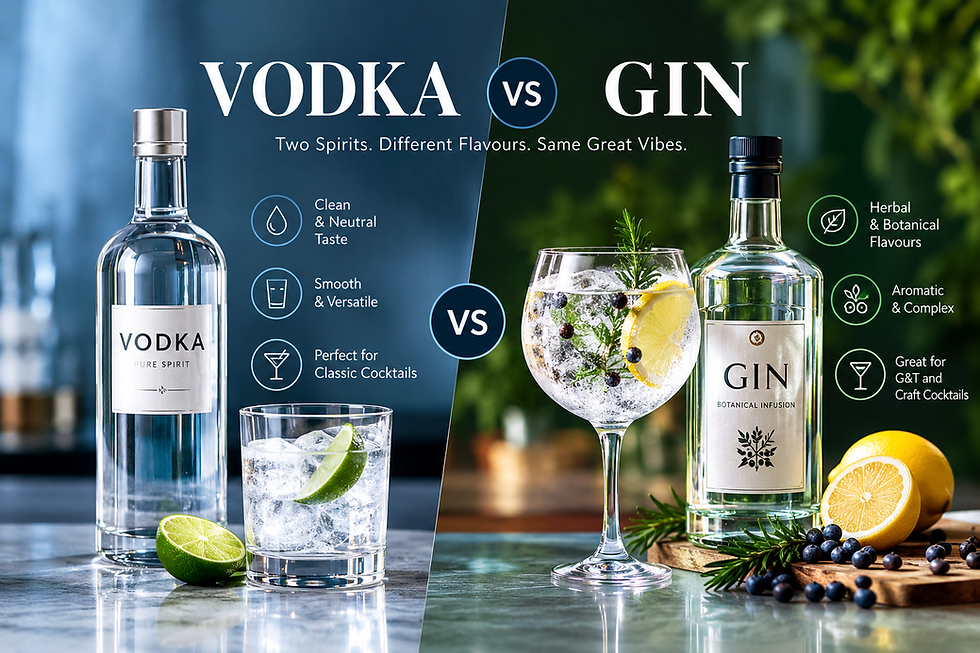
When exploring different spirits, Vodka vs Gin is one of the most interesting comparisons for beginners. Both are popular, versatile, and commonly used in cocktails, but they have very different personalities. Understanding the Difference Between Vodka and Gin can make it easier to choose the right spirit for your taste.
The biggest contrast in Vodka vs Gin comes from flavor. Vodka is usually known for its clean, neutral character, while gin is recognized for botanical flavors, especially juniper. If you are wondering about the Difference Between Vodka and Gin, looking at their ingredients, production methods, aromas, and serving styles is a good place to start.
What Is the Main Difference Between Vodka and Gin?
The Difference Between Vodka and Gin starts with their flavor profiles. Vodka is generally distilled to create a smooth and relatively neutral spirit. This allows mixers and other ingredients to stand out.
Gin, on the other hand, is made distinctive through botanicals. Juniper is especially important because it gives traditional gin its recognizable pine-like character. Herbs, spices, citrus peels, flowers, and other botanicals may also be used.
When comparing Vodka vs Gin, vodka usually offers a subtle drinking experience, while gin can provide layers of aroma and flavor. This basic Difference Between Vodka and Gin explains why the two spirits behave differently in cocktails. For cocktail ideas and ways to explore this comparison, you can read more about Vodka vs Gin cocktails.
How Are Vodka and Gin Made?
Production is another important part of the Difference Between Vodka and Gin. Vodka can be produced from different agricultural ingredients, including grains, potatoes, corn, and other fermentable materials. After fermentation and distillation, the spirit is generally treated to achieve a clean and neutral profile.
Gin begins with a spirit that is then flavored with botanicals. The botanical ingredients can be introduced during distillation or through other approved production techniques, depending on the style.
In the Vodka vs Gin comparison, the production process explains much of the final taste. Vodka focuses on purity and neutrality, while gin focuses more heavily on botanical character.
The Difference Between Vodka and Gin can therefore be noticed even before taking a sip. Their aromas often give you a clue about what to expect.
Why Does Gin Taste More Herbal Than Vodka?
One reason gin tastes more complex is the use of botanicals. Juniper is the defining botanical in gin, but producers may also use coriander, angelica root, cardamom, citrus peel, cinnamon, pepper, or floral ingredients.
Vodka normally does not have the same botanical emphasis. Its relatively neutral character makes it popular with people who prefer a mild base for mixed drinks.
This is an important point in Vodka vs Gin. If you enjoy herbal, spicy, floral, or citrusy flavors, gin may offer more noticeable character. If you prefer a clean spirit that blends easily with other ingredients, vodka may provide a different experience.
The Difference Between Vodka and Gin becomes especially clear when both are tasted without strong mixers.
Vodka vs Gin Which Is Stronger?
A common question is Vodka vs Gin Which Is Stronger? The answer depends on the individual bottle rather than simply whether the spirit is vodka or gin.
Many vodkas and gins are bottled around similar alcohol levels, often close to 40% ABV. However, some products can have higher or lower alcohol concentrations.
So, when asking Vodka vs Gin Which Is Stronger, check the alcohol-by-volume percentage printed on the bottle. A 40% ABV vodka and a 40% ABV gin contain the same percentage of alcohol by volume.
The question Vodka vs Gin Which Is Stronger cannot be answered solely by the spirit category. The specific brand and bottling strength matter.
When comparing Vodka vs Gin Which Is Stronger, remember that serving size and the amount of spirit in a cocktail also affect total alcohol consumption.
Does Vodka Have a Strong Taste?
Vodka is often described as smooth, clean, crisp, or neutral. However, neutral does not necessarily mean completely flavorless. Different production methods and ingredients can create subtle differences in texture and taste.
In Vodka vs Gin, vodka generally has fewer pronounced botanical notes. Some vodkas may have a slightly creamy, grainy, peppery, or sweet impression depending on how they are produced.
This is another useful part of the Difference Between Vodka and Gin. Vodka is often chosen when someone wants the mixer, fruit, or other cocktail ingredients to remain prominent.
If you want to explore different vodka choices, vodka selections can provide a useful starting point.
Why Is Gin So Aromatic?
Gin is aromatic because botanicals play a central role in its identity. Juniper commonly provides a piney note, while citrus can add freshness and spices can introduce warmth.
The botanical recipe differs from one gin to another. This means two gins can taste noticeably different even when they have a similar alcohol percentage.
In the Vodka vs Gin comparison, aroma is one of the easiest differences for beginners to recognize. Gin may smell floral, citrusy, spicy, earthy, or herbal.
The Difference Between Vodka and Gin is therefore not only about taste. Smell and aroma are also major parts of the drinking experience.
Vodka vs Gin Which Is Stronger in Cocktails?
The question Vodka vs Gin Which Is Stronger can also come up when discussing cocktails. Alcohol strength depends mainly on the ABV of the spirit and how much of it is used.
A gin cocktail may taste stronger because juniper and other botanicals create a more noticeable flavor. That does not automatically mean it contains more alcohol.
Similarly, a vodka cocktail can taste mild because fruit juice, soda, or other mixers can soften its flavor. The actual alcohol content still depends on the amount of vodka used.
So, Vodka vs Gin Which Is Stronger should be answered using the bottle's ABV and serving amount rather than taste alone.
How Do Vodka and Gin Work With Mixers?
Mixers are another useful way to understand the Difference Between Vodka and Gin.
Vodka works well with ingredients such as:
Soda water
Tonic water
Citrus juice
Cranberry juice
Ginger beer
Tomato juice
Fruit-based mixers
Gin is commonly paired with:
Tonic water
Soda water
Lemon
Lime
Grapefruit
Cucumber
Herbal ingredients
Floral mixers
The Vodka vs Gin difference becomes particularly obvious when using simple mixers. A neutral vodka can let the mixer take center stage, while gin can add its own botanical personality.
This is why the Difference Between Vodka and Gin matters when selecting a cocktail base.
Vodka vs Gin: Which One Has More Flavor?
Flavor preference is personal, but the Vodka vs Gin contrast is easy to understand. Vodka generally emphasizes a clean and neutral profile, while gin emphasizes botanical flavor.
The Difference Between Vodka and Gin is particularly noticeable in classic mixed drinks. Gin can contribute juniper, citrus, spice, floral notes, or herbal qualities.
Vodka generally provides a simpler canvas. This makes it useful for cocktails where other ingredients are intended to dominate.
When discussing Vodka vs Gin, it is helpful to remember that there are many styles within both categories. Not every vodka or gin tastes exactly the same.
Vodka vs Gin Which Is Stronger: Does Taste Tell You?
Taste is not a reliable way to determine whether one spirit has more alcohol. A flavorful gin can seem stronger because of its botanical character, while a smooth vodka can seem lighter.
That is why Vodka vs Gin Which Is Stronger should always be considered alongside ABV and serving size.
A spirit with a higher ABV contains more alcohol by volume than one with a lower ABV, regardless of whether it tastes smooth, sweet, herbal, or spicy.
The Difference Between Vodka and Gin is mainly about composition, flavor, aroma, and production rather than automatically being about alcohol strength.
What Should Beginners Know About Vodka vs Gin?
For beginners, the easiest way to understand Vodka vs Gin is to focus on flavor.
Vodka is usually:
Clean and neutral
Easy to mix
Mild in aroma
Suitable for many cocktail styles
Gin is generally:
Botanical and aromatic
Juniper-forward
More herbal or citrusy
Popular in refreshing mixed drinks
The Difference Between Vodka and Gin becomes easier to recognize after tasting each spirit separately and then trying them with the same type of mixer.
If you are still asking Vodka vs Gin Which Is Stronger, compare the ABV printed on the bottles instead of relying on flavor.
How Does the Difference Between Vodka and Gin Affect Cocktail Choices?
The Difference Between Vodka and Gin can influence the entire personality of a cocktail. Vodka often works when you want other ingredients to stand out. Gin is useful when you want the base spirit itself to contribute a noticeable botanical character.
In Vodka vs Gin, neither category has exactly the same flavor experience. A simple change from vodka to gin can make a drink more herbal, aromatic, or citrus-forward.
Likewise, replacing gin with vodka can make the same cocktail taste cleaner and less botanical. This is one of the simplest ways to experience the Difference Between Vodka and Gin at home.
Vodka vs Gin Which Is Stronger for Everyday Drinks?
Again, Vodka vs Gin Which Is Stronger depends on the specific products and serving sizes. Both categories include bottles with different ABV levels.
For everyday mixed drinks, the amount poured is just as important as the spirit category. A larger serving of a lower-ABV spirit can contain a similar amount of alcohol to a smaller serving of a higher-ABV spirit.
Therefore, Vodka vs Gin Which Is Stronger is best answered by checking the label and measuring the serving.
The Difference Between Vodka and Gin remains primarily a difference in production, botanical use, aroma, and flavor.
Frequently Asked Questions
What is the main Difference Between Vodka and Gin?
Vodka is generally known for a clean, neutral profile, while gin gets much of its character from botanicals, especially juniper. This creates a noticeable difference in aroma and flavor.
Vodka vs Gin Which Is Stronger?
Neither is automatically stronger. The alcohol strength depends on the ABV of the specific vodka or gin and the amount served.
Is gin more flavorful than vodka?
Gin is usually more noticeable in flavor because of its botanical ingredients. Vodka is generally designed to have a cleaner and more neutral character.
Can vodka and gin be used in the same cocktails?
Some cocktails can be prepared with either spirit, but the result will taste different. Gin adds botanical notes, while vodka usually keeps the drink cleaner and more neutral.
What creates the Difference Between Vodka and Gin?
The main differences come from their production and flavoring. Vodka generally aims for neutrality, while gin is characterized by botanicals such as juniper, citrus, herbs, and spices.
Vodka vs Gin Which Is Stronger by alcohol percentage?
It depends on the bottles being compared. Check each product's ABV because vodka and gin can both be bottled at different alcohol strengths.
Why does gin taste like juniper?
Juniper is a defining botanical in gin. Its use gives gin the distinctive pine-like, herbal character associated with the spirit.
Is vodka completely flavorless?
Not necessarily. Vodka is generally neutral, but different ingredients and production methods can create subtle differences in aroma, texture, and taste.
Is the Difference Between Vodka and Gin noticeable in cocktails?
Yes. Gin can add botanical, herbal, citrus, or spicy notes, while vodka usually allows the other cocktail ingredients to become more prominent.
Vodka vs Gin Which Is Stronger when mixed with tonic?
The strength depends on the ABV and quantity of spirit used. Tonic changes the flavor and dilution but does not make one spirit category automatically stronger.



Comments